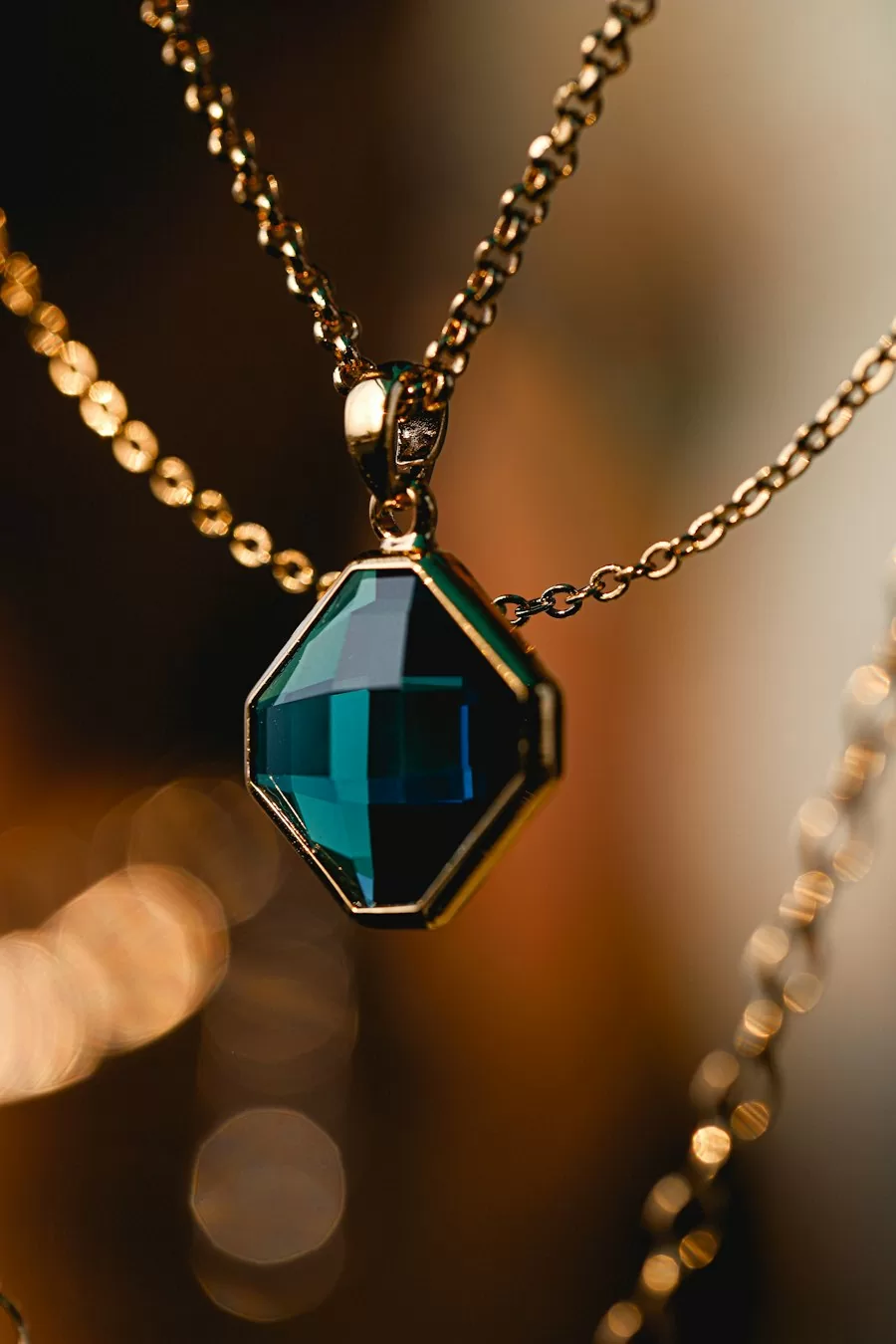
CZ vs Moissanite vs Gemstone: Pendant Materials Compared
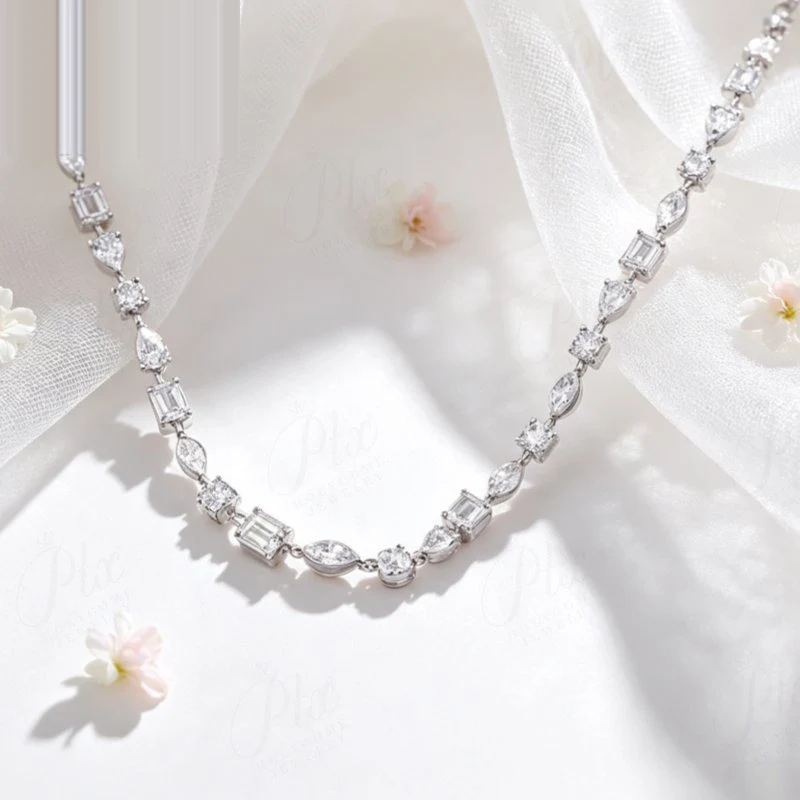
Stones & Gemstones — the notes below follow the order we actually quote, sample and ship these pieces.
When you order a personalized silver necklace, the pendant is only half the decision. The stone that sits next to the name, whether it is a tiny birthstone charm or a larger centerpiece, changes the look, the durability, and the cost of the piece. Three options dominate the world of affordable fine jewelry: cubic zirconia, moissanite, and natural or created birthstones. Each has its own strengths, and the right choice depends on how you plan to wear the necklace and what you want it to look like in ten years. This guide compares the three materials honestly, so you can choose the stone that fits your life.
Cubic Zirconia: The Affordable Classic
Cubic zirconia, usually called CZ, is a lab-created diamond simulant. It is made from zirconium dioxide, crystallized under controlled conditions. For decades, CZ has been the go-to stone for affordable jewelry because it is bright, clear, and very inexpensive. It is the stone you see on most fashion jewelry, on many engagement rings lookalikes, and on the birthstone charms attached to name necklaces.
The good parts. CZ comes in every color imaginable, which makes it perfect for birthstone pendants. It is clean and colorless in its white form, and it has a high shine when new. Because it costs so little, you can add a CZ birthstone charm to a name necklace without dramatically raising the price. CZ stones are also uniform, with no inclusions or imperfections, which means a row of birthstones on a mother's necklace will match perfectly.
The trade-offs. CZ is soft compared to other stones. On the Mohs hardness scale it ranks around 8, which sounds decent, but in practice CZ scratches and clouds over time. The facets that make it sparkle when new wear smooth after a year or two of daily wear, and the stone starts to look dull. CZ can also chip if it takes a knock. It is a beautiful stone for occasional wear, but it is not built to be worn in the shower, at the gym, or while sleeping.
Best for. CZ is best for pendants that are worn on special occasions, or for small accent charms that do not take a lot of impact. It is also the right choice if budget is the main concern and you want the look of a colored stone without the price. A tiny CZ birthstone on a name necklace will look beautiful for years if it is treated gently.
Moissanite: The Brilliant Alternative
Moissanite is another lab-created stone, but it is in a different league from CZ. It is made from silicon carbide, the same material found in tiny amounts in meteorites. Moissanite was first developed as a diamond alternative, and it has grown rapidly in popularity for engagement rings and pendants. It is the stone that many people now choose when they want a diamond look without the diamond price and ethical concerns.
The good parts. Moissanite is extremely hard, ranking 9.25 on the Mohs scale. That means it resists scratches and keeps its polish for years. It is also more brilliant than a diamond, because it refracts light more strongly. A moissanite stone has a fiery, colorful sparkle that catches the eye from across a room. It does not cloud over the way CZ does. For a pendant worn every day, moissanite is built to last, and it will still look bright in a decade.
The trade-offs. Moissanite costs more than CZ, though it is still far cheaper than a natural diamond. It is also mostly sold in clear white; colored moissanite exists but is less common and more expensive. Some people find the extra sparkle of moissanite a little too much, especially in larger stones. The brilliance is real, but it is not for everyone's taste. If you prefer a subtler look, a smaller moissanite stone or a CZ may be the better choice.
Best for. Moissanite is best for a pendant that will be worn daily, especially if you want a clear white stone that looks like a diamond without the diamond price. It is a smart choice for an engagement-adjacent piece or a special birthday gift. A moissanite pendant is something she can wear to work, to dinner, and on weekends without worrying about damaging it.
Natural and Created Birthstones
Birthstones are the stones associated with each month of the year. They range from garnet in January to blue topaz in December. Some birthstones, like ruby and sapphire, are genuinely hard and durable. Others, like opal and pearl, are soft and need careful handling. The birthstone tradition is more than a thousand years old, and the modern list was standardized in the 1950s.
The good parts. Birthstones carry meaning. A necklace with a small birthstone charm next to a name is a piece that says something personal. The colors are rich and varied, from the deep red of garnet to the sky blue of aquamarine. A real birthstone pendant feels like a small treasure, something with a history and a story that goes beyond a simple fashion accessory.
The trade-offs. Natural birthstones vary widely in quality and price. Some, like amethyst and garnet, are affordable and durable. Others, like emerald and pearl, are soft, porous, and easily damaged. Many birthstones sold in affordable jewelry are lab-created or treated, which is fine, but you should know what you are getting. Natural stones also have inclusions and imperfections that CZ and moissanite do not, which some people find charming and others find disappointing.
Best for. Birthstones are best for personalized gifts where the meaning matters more than the sparkle. A mother's necklace with her children's birthstones, or a birthday gift with the recipient's birth month, is a piece that will be worn and kept for decades. The stone does not have to be the hardest, because the story is the point.
Durability: What Wears Best?
If you plan to wear the pendant every single day, durability should be your first consideration. On the Mohs scale of mineral hardness, where 10 is a diamond, the order matters. Moissanite at 9.25 is scratch-resistant for daily wear. Sapphire and ruby at 9 are extremely durable. Cubic zirconia at 8 sounds close, but it clouds and scratches faster than the number suggests. Garnet and amethyst at 7 to 7.5 are fine for pendants but not for rings. Pearl and opal at 2.5 to 5 are best for occasional wear.
A pendant takes less impact than a ring, because it sits on the chest rather than on the hand. But it still bumps against seatbelts, seat backs, and desktops. A harder stone survives this routine life much better than a soft one. If you want a necklace that looks as good on year five as it did on day one, choose the hardest stone you can afford.
Brilliance and Look
If you want maximum sparkle, moissanite wins. Its refractive index is higher than diamond, which means it throws rainbow-colored light. CZ is bright but flat by comparison, with a more silvery white flash. Natural birthstones have a subtler, deeper glow that depends on the color of the stone rather than on sparkle. A red garnet does not sparkle like a diamond; it glows like a small ember.
For a name necklace, the stone is usually an accent rather than the main event. A tiny 3mm CZ birthstone charm next to a script name looks delicate and colorful. A larger 6mm moissanite stone as the centerpiece of a pendant reads as a real piece of jewelry. Choose the scale of the stone to match the scale of the pendant, and do not let the stone overwhelm the name.
Price Comparison
Price is where the three options diverge most sharply. A small CZ charm costs only a few dollars extra. A moissanite stone adds a moderate amount to the price of a pendant. A natural birthstone can range from a small upcharge for common stones like amethyst to a significant cost for rarer stones like emerald. For most personalized silver necklaces, the stone is a small accent, not the centerpiece. That is why CZ and created birthstones are the most common choices: they give the color and meaning you want without making the piece unaffordable.
Which Should You Choose?
The right stone depends on the necklace's purpose. If it is a daily-wear name necklace with a small birthstone charm, a created birthstone or CZ is the practical choice. If it is a special gift, like an anniversary or a milestone birthday, a moissanite centerpiece is a step up that will still look right in ten years. If the piece carries family meaning, like a mother's necklace with each child's birth month, choose the natural or created birthstones regardless of durability, because the story matters more than the wear.
Caring for Whatever You Choose
All three stone types benefit from simple care. Keep the pendant away from harsh chemicals, perfume, and chlorine. Clean it gently with warm soapy water and a soft brush. Store it separately so the stones do not scratch each other. With that routine, a CZ charm will still look good for years, and a moissanite pendant will be wearing beautifully decades from now. The stone you choose is less important than how you care for it, but choosing the right stone makes the care easier and the piece longer lasting.
Setting Styles: Prong, Bezel, and Channel
Beyond the stone itself, the way the stone is set into the pendant affects durability. Prong settings hold the stone with small metal claws. They show off the stone well, but the prongs can catch on clothing and wear down over time. Bezel settings wrap a metal rim around the stone, which protects the edges and makes the setting very secure. Channel settings hold the stone between two walls of metal, which is common in rows of birthstones on mother's necklaces. For a pendant worn daily, a bezel or channel setting is the most durable, because there are no prongs to catch or bend.
When you order a pendant, ask how the stone is set. A small CZ birthstone in a bezel setting will survive years of daily wear. The same stone in a prong setting may lose a stone within a year if the prongs catch on sweaters. The setting matters as much as the stone when you are buying a piece for everyday use.
Cleaning Each Stone Type
Different stones need different cleaning. CZ can be cleaned with warm soapy water and a soft brush, but avoid ultrasonic cleaners, which can crack it. Moissanite is very hardy and can handle gentle ultrasonic cleaning, but warm soapy water is always safe. Natural birthstones vary: amethyst and garnet tolerate warm soapy water, but opal and pearl need a soft dry cloth because they are porous and absorb water. When in doubt, clean with mild soap and water, and avoid chemical dips, toothpaste, and abrasive cloths, which scratch the silver and damage softer stones.
How Color Choice Changes the Look
The color of the stone changes the whole feel of the pendant. A clear white stone, whether CZ or moissanite, reads as classic and versatile. It goes with every outfit and every skin tone. A colored birthstone adds personality and meaning, but it also limits the outfits it pairs with. A deep red garnet or a sapphire blue stone works with neutral wardrobes. A bright pink or green stone may only go with certain colors. If you want a necklace that works with everything, choose a clear stone. If you want a necklace that says something specific, choose the birthstone.
Many customers compromise by choosing a small clear stone as the centerpiece and adding a tiny birthstone charm beside it. This gives the versatility of the clear stone with the personal meaning of the birth month. It is a popular choice for a reason, and it works well on a name necklace where the pendant is already small. Whichever stone you choose, remember that the pendant is an accent to the name, not a replacement for it. The name should remain the first thing people read, and the stone should be the second thing they notice.
Related Articles
Authoritative References
For buyers who need to verify the technical and regulatory basis of this guide, the following independent institutions publish authoritative reference data:
- GIA Gem Encyclopedia - independent grading and identification reference for natural and lab-grown gems.
- Wikipedia: Moissanite - peer-reviewed background on moissanite chemistry, optics and history.
Frequently Asked Questions
Is moissanite a good diamond alternative for retail buyers?
Yes for price-sensitive customers who want brilliance and hardness. Moissanite ranks 9.25 on the Mohs scale, holds up to daily wear and costs a fraction of a natural diamond of the same size, so it resells fast in bridal and fashion lines.
What is the minimum order for wholesale moissanite?
MOQ starts at 50 pieces per design for stock items. Custom cuts and private-label settings usually start at 100–300 pieces depending on the mold.
Do you provide certificates with moissanite stones?
Yes. Every parcel ships with GRA or IGI documentation listing carat weight, color grade and cut. We recommend passing the certificate to your end customer for trust.
How long does sample and bulk production take?
Samples ship in 3–5 days. Bulk runs take 15–20 days under 500 pieces, and 25–30 days for custom work.
Related reading: Cubic Zirconia vs Moissanite: Durability Compared, Moissanite Ring Stone Setting Types Compared, Moissanite Earring Back Types Compared.
Every figure here is quoted from our own bench in Wuzhou.
Send a spec sheet