Whose Initial Should You Wear? Own, Child's or Partner's
Engraving & Personalisation — the notes below follow the order we actually quote, sample and ship these pieces.
When customers design a letter necklace, the decision that stalls them isn't silver or gold. It is the letter itself. Type your own initial and it reads as classic. Type your child's and it reads as a mother's piece. Type your partner's and it reads as a quiet commitment. None of them is wrong, but they are not interchangeable either.
Here is how people actually choose, and what each one says on the body.
Your own initial: the default that never goes out
Wearing your own first initial is the oldest and most flexible choice. It is personal without being sentimental, and it works for work, weekends, and weddings alike. A single lowercase letter at eight millimeters sits discreetly at the collarbone; a bold block letter at fifteen millimeters is a statement. Most people's first letter necklace is their own, and for good reason—it never has to be explained, and it never goes out of style the way a trend piece does.
Your child's initial: the modern mom piece
Initial pendants carrying a child's letter are one of the fastest-growing categories we sell. The emotional logic is straightforward: the child is too small to wear jewelry safely, so the mother wears the symbol for both of them. Many mothers of two or three stack the letters, or wear one on a chain and the rest on a bracelet. The key here is scale—keep each letter small, because stacking three large letters turns delicate into clunky fast. A 30 millimeter trio reads as charm-bracelet energy; a 12 millimeter trio reads as intentional.
Your partner's initial: commitment without a ring
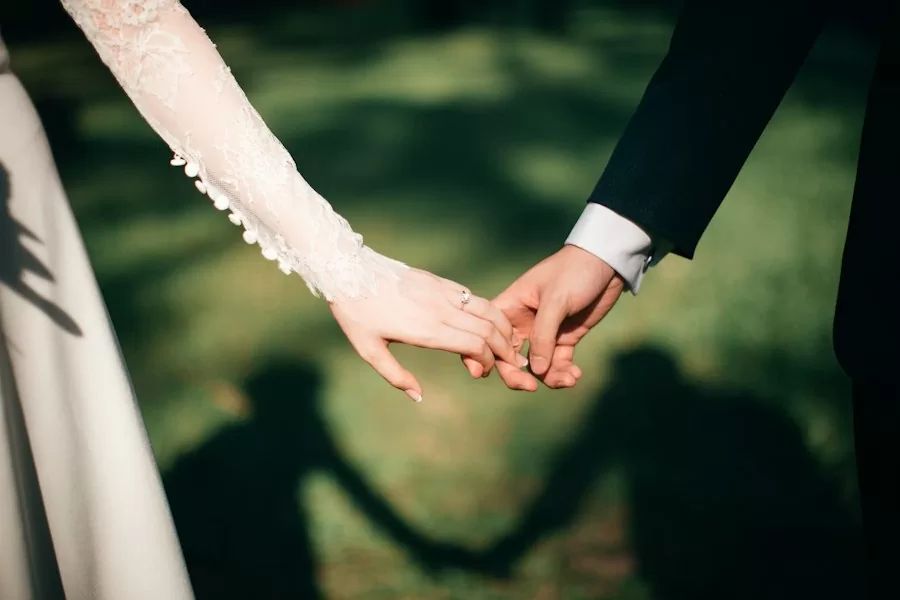
Wearing a partner's initial is the unmarried version of a wedding band. It is also the choice that reads differently depending on who is looking. Coworkers see a letter; the two of you see a promise. This works particularly well for long-distance relationships, where a ring would feel too heavy but a small letter on the chest reads as steady and daily. It also works for couples who simply don't like rings at all—this is the commitment piece for people who want meaning without the formality.
A letter for someone who is gone
A meaningful share of initial pendants are ordered for someone who is no longer here—a parent, a grandparent, a close friend. In that case the initial is a memorial, and the choice of font matters more than usual: a clean serif reads as respectful and legible, while an ornate script can feel playful next to grief. Many customers pair the letter with a small date on the reverse, or a birthstone beside it. The piece reads quietly to strangers and loudly to the wearer.
Two letters side by side
When one letter is not enough, two letters work better than a crowded monogram. Two lowercase letters on a slim bar read as modern and understated. Two first initials flanking a shared last name read as a couple's piece. The mistake to avoid is forcing three letters onto a pendant that only wanted one. At small sizes, three cramped letters lose legibility; two well-spaced ones breathe.
If you want to see how much space each pendant size actually gives you, our silver pendants range shows the real proportions rather than the idealized product shot.
Stacking letters from different people
Once people understand that letters can represent anyone, they start stacking them: one chain with her own initial, a shorter chain with her daughter's, a third with a shared anniversary date. This works, but keep the letters small and the chain lengths separated by at least two inches, or the pieces tangle into one lump. The goal is three quiet layers, not a charm wall. Many customers also mix a letter pendant with a plain disk or a small birthstone, so the stack reads as curated rather than themed.
If you are buying it as a gift, think about who the recipient talks about most at dinner. The letter that comes up unprompted in conversation is usually the one she wants to wear. Asking directly ruins the surprise; listening for one evening usually answers it.
The honest answer
There is no wrong initial. The right question is what you want the necklace to do: accessorize, connect, remember, or promise. Once you know that, the letter writes itself.
If you are truly torn between two letters, order the one that means more rather than the one that looks better. A letter you love the meaning of will still suit you in ten years; a letter you chose for its shape will start to feel arbitrary the moment the trend it belonged to fades. Most people end up keeping the first letter they ever ordered, and the ones they wear longest are the ones that meant something on day one.
The metal and the chain are details after that. The letter is the whole point, and it should be the decision you spend the most time on—not the least.
Authoritative References
For buyers who need to verify the technical and regulatory basis of this guide, the following independent institutions publish authoritative reference data:
- ISO 9001 Quality Management - the international standard for consistent production quality.
- Wikipedia: Jewelry - manufacturing processes, materials and global trade background.
Frequently Asked Questions
How do I verify a factory before placing a bulk order?
Request a production video, business license, export records and a paid sample run. A factory that accepts a 50-piece test order is usually a real manufacturer.
What payment terms do you offer?
30% T/T deposit with the balance against the bill of lading. This protects both sides on first orders and can move to net terms after a track record.
What is your normal reject rate?
3–5% under 10x loupe inspection for cast and set pieces. Defective units are replaced free in the next shipment.
Where is the factory located?
Wuzhou, Guangxi, China—the core lab-grown and moissanite manufacturing cluster. Shipments go via Guangzhou or Shenzhen ports.
Every figure here is quoted from our own bench in Wuzhou.
Send a spec sheet