Custom Engraved Jewelry Ideas That Read as Personal, Not Generic
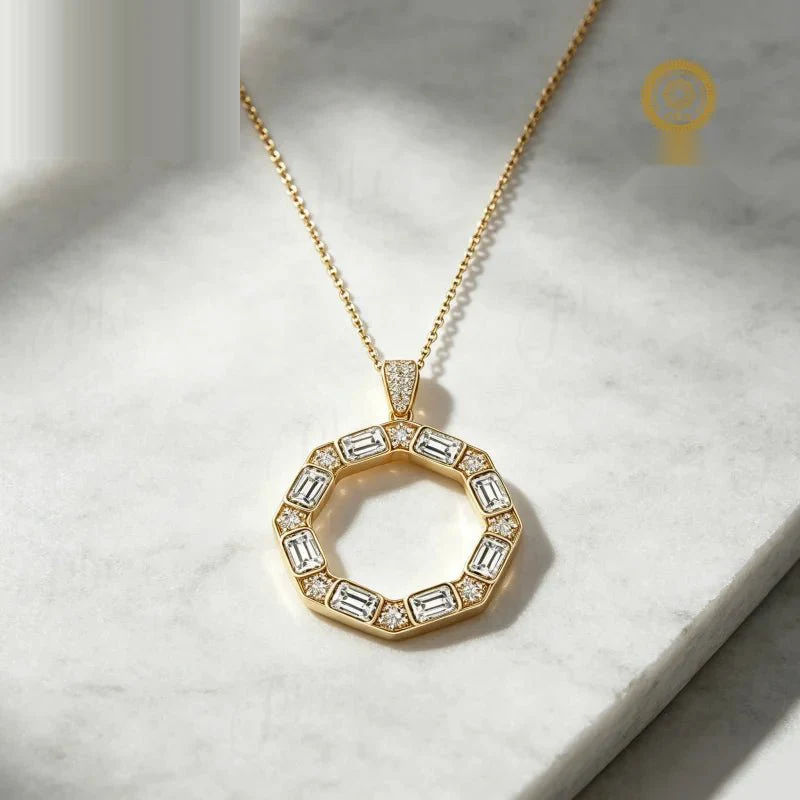
Engraving & Personalisation — the notes below follow the order we actually quote, sample and ship these pieces.
The difference between an engraving and a generic inscription
A name is the starting point, not the whole idea. The engraving categories that earn repeat orders are the ones that mean something specific to one person. The job of a buyer or boutique is to offer a short menu of proven concepts, then explain to the supplier exactly how each one is cut. Sterling silver tolerates fine engraving far better than brass or plated zinc, which is why it is the default for custom work.
Concepts that engrave cleanly
Dates in three formats
A wedding date, a child's birth date, or a memorial date all fit on a 25mm bar. Offer the numeric format, the written format, and the Roman-numeral format. Roman numerals read elegant on a thin bar but confirm the conversion with the customer - a wrong IVX is a costly remake.
Coordinates
Latitude and longitude of a proposal, a first home, or a hometown is a modern, gender-neutral option. Keep the format to degrees and minutes, not decimals, so the line stays short. Most bars hold 18 to 22 characters per line at a legible size.
Handwriting
Scanning a real signature or a child's scribble converts to a vector that the laser can cut. The trick is contrast: low-contrast handwriting scans wash out. Ask customers for a dark pen on white paper, photographed in daylight, before you send the file to the factory.
Fingerprints and palm lines
A scanned fingerprint fills a round disc beautifully. The ridge detail must be cleaned up in vector software or the engraving becomes a gray smudge. Position the disc as a keepsake, not an everyday pendant, because the detail shows best at close range.
A short phrase
Three to five words - a latitude line, a child's nickname, an inside joke - work on the reverse of a disc. Longer sentences shrink the font past legibility. Treat anything over ten words as a design problem, not a typography problem.
What to avoid engraving
- Full sentences in script font at small sizes; the joins blur.
- Social media handles or email addresses that may change within a year.
- Photos converted directly to engraving; they need interpretation, not transfer.
- Religious symbols the factory has not tooled before; request a sample first.
Depth and fill matter
Surface laser engraving sits on top of the metal and fades where the pendant rubs against clothing. Deep rotary engraving cuts a channel that holds a dark patina fill, which keeps the lettering readable for years. When you spec a custom line, ask whether the cut is shallow surface marking or a true recess. The cost difference is small; the perceived quality gap is large.
File preparation for custom art
Handwriting and fingerprint files need clean backgrounds. Ask for dark ink on white paper, photographed in daylight without flash, at the highest resolution the customer can send. Pale pencil or scanned notebook edges wash out the engraving. Vectorize the scan in software that traces the strokes, then simplify the paths so the laser has clean lines. A rough scan sent straight to the factory returns a gray smudge, and that remake comes out of your margin.
A proofing workflow that prevents returns
Personalization returns almost always trace to a skipped step. Build a fixed workflow: receive the order, transcribe the text exactly as written, generate a digital proof with the actual font and spelling, send it to the buyer for written approval, then release to production. The 48-hour approval window costs nothing and catches typos, wrong dates, and reversed coordinates before the piece is cut. Do not begin production on verbal approval; require a written confirmation reply.
Pricing the engraving tiers
Charge for engraving by complexity, not by character count. Tier one covers names, dates, and short words on a flat bar. Tier two covers coordinates, roman numerals, and two-line layouts. Tier three covers digitized handwriting and fingerprints, which require vector cleanup. Communicate the tiers up front so customers do not expect a fingerprint charm at a name-bar price.
Recipient examples that work
For a new parent, the child's name and birth time on a bar. For a graduate, the year and school coordinates on a disc. For a long-distance partner, the hometown coordinates on the reverse of a plain pendant. For a memorial, a fingerprint with the dates. Each concept pairs a shape with an engraving rather than asking the customer to design from scratch.
Turnaround and rush expectations
Custom engraving is not off-the-shelf. A standard name or date runs seven to ten working days through a reliable supplier. Handwriting and fingerprint pieces add three to five days for vector cleanup. During Valentine's and Mother's Day windows, lead times stretch by a week. Quote the longer window to the customer up front, then under-promise and over-deliver. A rush fee is reasonable for orders inside five days, but build the calendar so you rarely need it.
For engraving templates and bar sizes, see our custom engraved pieces.
Authoritative References
For buyers who need to verify the technical and regulatory basis of this guide, the following independent institutions publish authoritative reference data:
- ISO 9001 Quality Management - the international standard for consistent production quality.
- Wikipedia: Jewelry - manufacturing processes, materials and global trade background.
Frequently Asked Questions
How does the custom OEM process work?
Send a reference, sketch or CAD file. We quote, produce a 3D render, then a wax or resin model for approval before casting. Nothing goes to bulk without written sign-off.
How long does a custom sample take?
About 20 days for a new CAD model, including one revision round. Repeat designs reuse the existing mold and ship in 3–5 days.
What is the custom MOQ?
100–300 pieces per design depending on the mold and stone setting complexity.
Do you sign NDAs for private label?
Yes. Private-label clients get an NDA and exclusive mold use for the agreed term.
Every figure here is quoted from our own bench in Wuzhou.
Send a spec sheet