Buying & Wholesale: Where Comes From: The Supply Chain Behind the Price
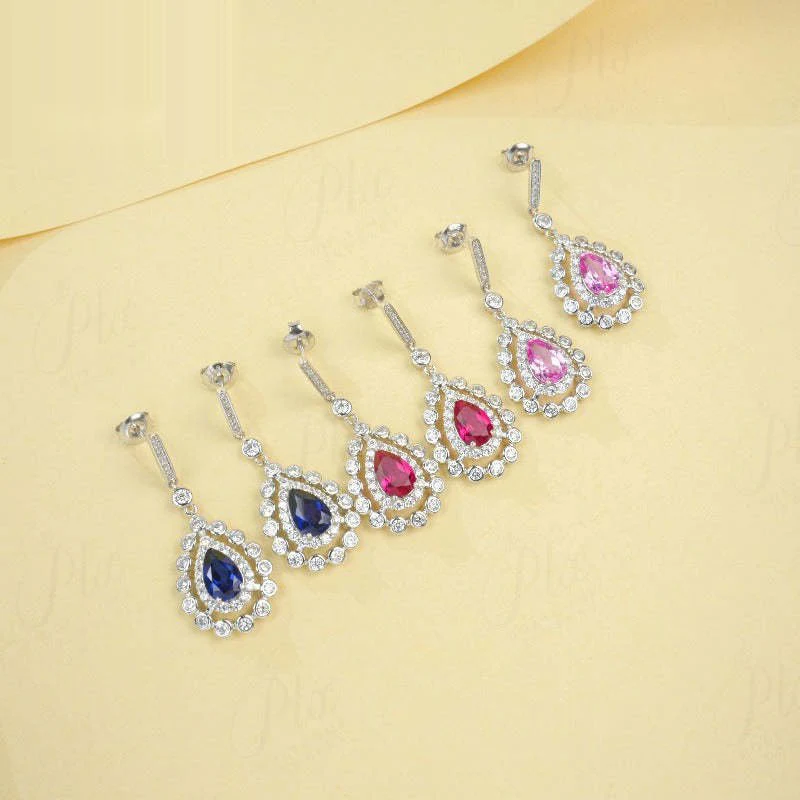
Buying & Wholesale — the notes below follow the order we actually quote, sample and ship these pieces.
A Buying & Wholesale price carries four supply steps: alloy, stone, casting and finishing. Knowing which step a supplier controls explains both the price and the risk.
Step one and two: alloy and stone
Alloy comes from a mill, usually in sheet, grain or tube. Stones come from cutting centers, and the cutting quality is set there, not at the setting bench. On Buying & Wholesale, a cheap stone usually means a cheaper cut, not a cheaper rough.
Ask which mill and which cutting source. The answer tells you what can change without notice.
Seal the approved sample in a bag with the PO number. It is the only physical record that settles a claim without an argument.
Step three: casting
Casting is either in-house or subcontracted. In-house means control over the alloy mix and the queue; subcontracted means a shared queue and a longer lead time in peak.
On Buying & Wholesale, the casting arrangement is the single best predictor of peak-season reliability.
| Step | Who controls | Risk if opaque |
|---|---|---|
| Alloy | Mill | Purity drift |
| Stone | Cutting center | Grade change |
| Casting | Factory or sub | Peak delay |
| Finishing | In-house or shop | Color variation |
| Plating | Plating shop | Thickness drift |
Read the table as a checklist rather than a recommendation. The right row depends on the price band, the wear pattern and the channel you sell into.
Photograph the first article before the batch runs. A shifted seat or a short prong is cheapest to fix at one piece.
Step four: finishing and plating
Plating can be in-house or a plating shop. A plating shop serves many clients and its bath chemistry drifts; that drift is the source of color variation between lots.
Ask for a color sample per lot, and for the bath maintenance record if the volume justifies it.
Reading the chain in a quote
A quote that names the mill, the stone source, the casting arrangement and the plating shop is a quote you can audit. A quote that names none of them is a price with no chain behind it.
On Buying & Wholesale, that transparency is worth more than a few percent on the unit price.
Keep the approved sample and the CAD together. One proves what was agreed, the other proves what was made.
What to check before the order
Run the five checks below in order. The first two protect the money, the last three protect the launch date.
- Ask which mill supplies the alloy.
- Ask where the stones are cut.
- Ask whether casting is in-house.
- Ask for a color sample per lot.
- Audit the chain, not only the price.
If a supplier cannot answer three of the five, treat the quote as a starting point rather than a plan. Ask again in writing and keep the answer with the PO.
Frequently Asked Questions
Why does Buying & Wholesale price vary between factories?
Different alloy sources, cutting quality and casting arrangements. The chain explains the price more than the labor rate does.
Does in-house casting matter?
In peak season, yes. It decides whether your order holds its slot.
Why does color drift between lots?
Usually plating bath chemistry. A sample per lot catches it early.
Can I audit a supply chain?
At the level of names: mill, cutting source, casting, plating shop. Four answers make a quote auditable.
What is the biggest hidden risk?
A stone source change without notice. The lot looks similar and grades differently.
How many suppliers should I keep?
Two approved sources for the top three designs, one for the tail. The second source is what keeps pricing honest.
Send the Buying & Wholesale spec. We return the four-step supply chain with the mill, stone source, casting and plating arrangement named. See the full range at HOLYCOME.
Buyers who get consistent lots are not luckier. They wrote the spec down and checked the first carton against it.
Every figure here is quoted from our own bench in Wuzhou.
Send a spec sheet