Birthstone Pendants Wholesale: First-Order Cost Math

Gifting & Occasions — the notes below follow the order we actually quote, sample and ship these pieces.
Why your first birthstone pendants wholesale order costs more than the quote
Every week a buyer sends me a competitor's price sheet for birthstone pendants wholesale and asks why my per-piece number looks different. Usually it is not the pendant that is different. It is what each of us is counting.
Quoted unit price is the number everyone negotiates. Landed cost is the number that decides whether the program makes money. On a first order those two numbers can sit 30 to 45 percent apart once certificates, freight, duty and the cost of a small production run are added in. Here is how I build that math on the floor, line by line, so you can do the same with any supplier.
The five cost lines inside one pendant
Take a single 925 silver pendant with a 5mm round stone, rhodium finish, 45cm chain. That is the most common first-order SKU we run. Break it into five lines.
- Metal: silver weight in grams times the day's silver fix, plus 8 to 12 percent for casting loss and scrap recovery.
- Stone: moissanite or lab-grown, priced per carat by size and color grade, with a reject allowance.
- Labor: setting, polishing, plating, and the chain attach, quoted per piece but driven by order quantity.
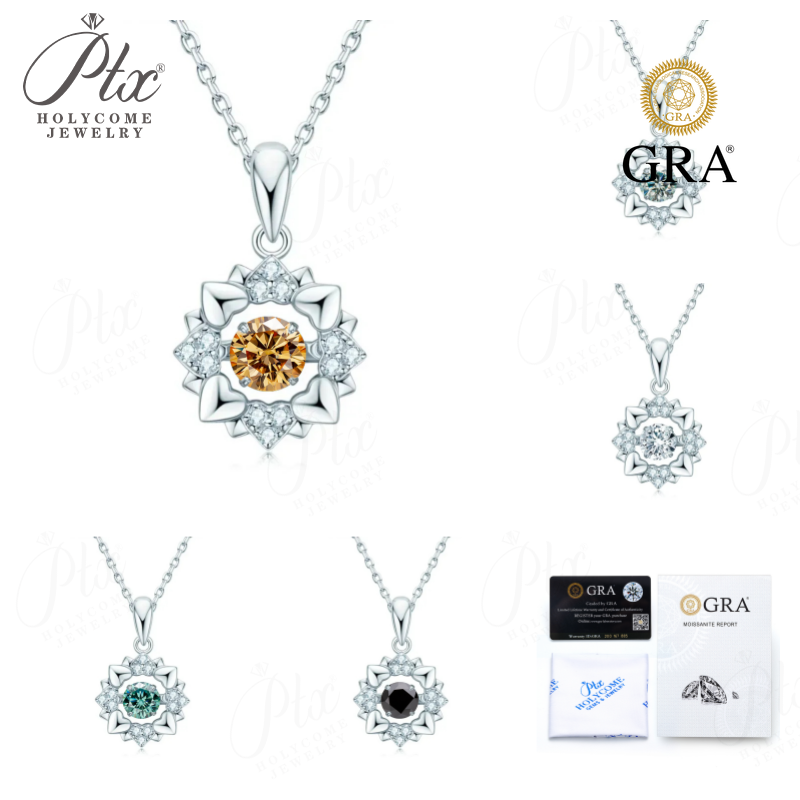
- Certificates: GRA card per stone is standard; IGI adds a real cost per piece on lab-grown.
- Packaging and logistics: pouch, box, carton, air freight, duty, and last-mile.
None of these lines is exotic. The mistake buyers make is comparing a quote that includes three of them against a quote that includes all five.
How the stone choice moves the whole number
This is where birthstone pendants wholesale pricing separates fast. The birthstone list itself is fixed by tradition, but the material behind each color is your call.
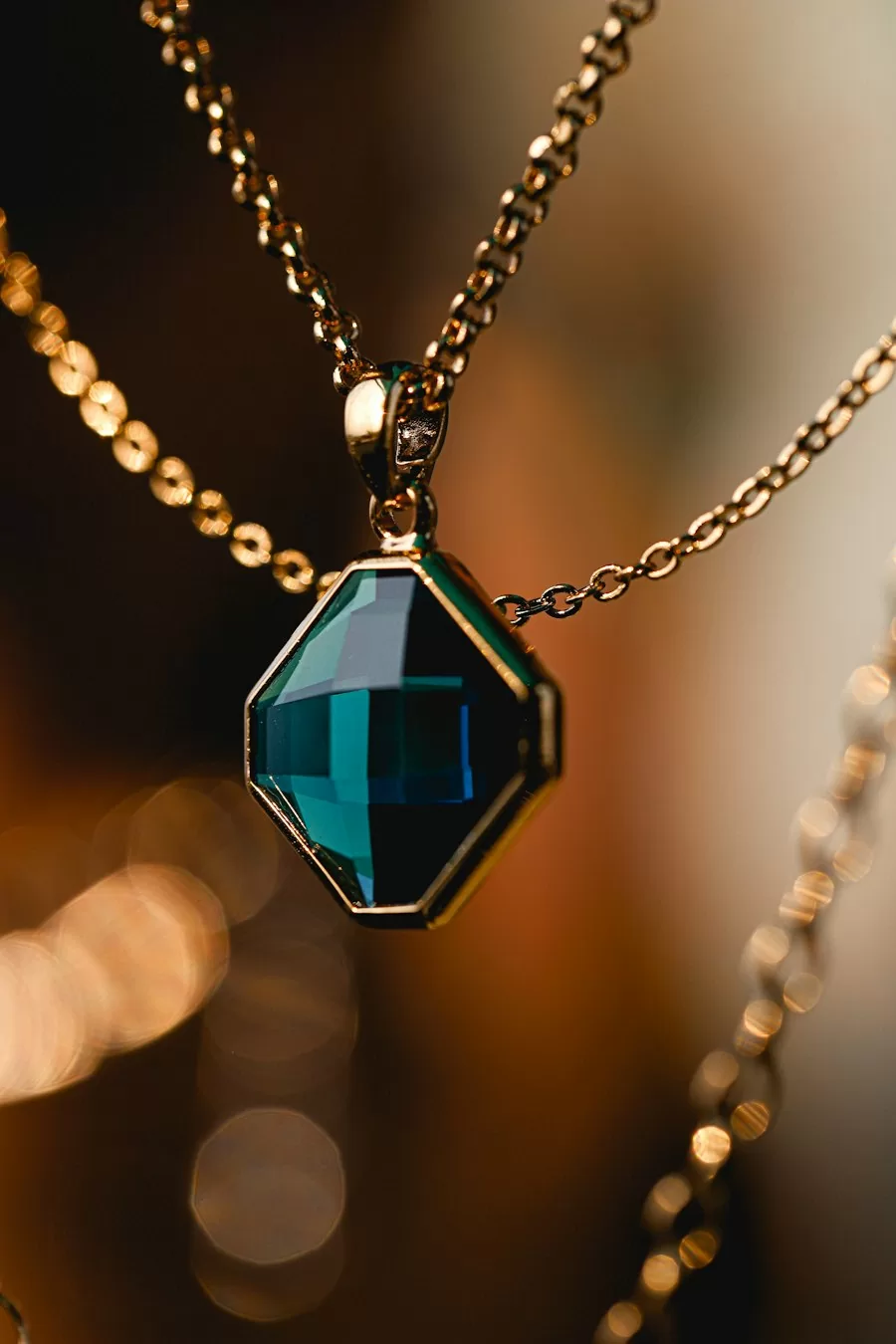
January garnet, February amethyst, March aquamarine, May emerald, July ruby, September sapphire, October tourmaline, November topaz, December blue topaz and blue zircon. April is diamond. June is traditionally pearl or alexandrite, and August splits between peridot and spinel depending on which chart the buyer follows. I keep both the modern and traditional lists on the QC bench because US buyers order from both, often in the same PO.
Natural stones in those colors are inconsistent in color and supply at scale. On a first order, that inconsistency shows up as a mixed parcel where 15 percent of the stones do not match the approved sample. Moissanite and lab-grown give you repeatable color and a GRA or IGI certificate per stone, which matters when your customer asks what the pendant is.
The cost effect is simple: a lab-grown or moissanite stone at a given size usually lands cheaper than a natural stone of comparable visual grade, and it arrives with a certificate. That certificate is part of the price, not a free extra.
MOQ math: why 30 pieces is the real starting point
We hold stock in the most-ordered birthstone and setting combinations, so a single piece is possible if you just need a sample or a photo shoot unit. Custom work, meaning your own setting, your own stone size, your own plating color, starts at 30 pieces per SKU.
That 30 is not a marketing number. It is the point where the casting tree fills, the plating bath runs economically, and the setter can work in one pass instead of resetting the bench. Below 30, your per-piece price climbs because setup is spread over fewer units.
Production runs 12 to 18 days from approved sample and deposit. First orders usually sit at the long end because the sample approval loop takes a few days on its own.
| Cost line | What drives it | First-order behavior | Who pays |
|---|---|---|---|
| Silver metal | Gram weight, silver fix | Fixed at order date | Buyer |
| Stone | Size, grade, certificate body | Scales with quantity | Buyer |
| Setting and plating | Labor minutes, batch size | Drops at 30 pcs+ | Buyer |
| Certificates | GRA or IGI, per piece | Flat per unit | Buyer |
| Freight and duty | Weight, Incoterm, HS code | DDP simplifies | Buyer |
Certificates, QC and the hidden rework line
Most quotes do not show a rework line. Ours does not either, because we try to make it zero. That is the whole point of a three-stage check.
Incoming stone check happens before anything is set: color match to the approved master, size tolerance, loupe for inclusions or coating. In-process inspection covers the setting seating, prong height, and solder joints while the piece is still on the bench. Pre-ship runs to an AQL sampling plan on the finished lot, plus a plating thickness spot check.
When a buyer skips the pre-ship step with a new supplier, the rework cost does not vanish. It reappears as returns, as remakes, or as a discount you give your own customer. Budget it either way.
Freight, duty and the deposit structure
Samples and small orders move by air courier. DDP delivery to a US or EU address typically runs 5 to 8 days once the goods leave us, and DDP means the duty and clearance are already inside the price you see. That is worth real money on a first order because you are not opening a customs bond for 30 pendants.
Payment terms are standard: T/T 30 percent deposit with the balance against the pre-shipment inspection report. PayPal is fine for samples, at the usual fee. We do not ask for full prepayment on a first production run, and you should be suspicious of anyone who does.
Where the 20 percent advantage actually comes from
I get asked why our cost, speed and yield usually run about 20 percent better than a typical trading company on the same spec. It is not a discount. It is the absence of a middle layer.
- We cast, set, plate and pack under one roof, so there is no margin stacked between a trading office and a workshop.
- Stone rejects are caught at incoming check, not after setting, so we are not paying labor on a bad stone.
- Silver scrap goes back into the melt instead of being sold off, which trims the metal line.
- Quotes go out from the person who runs the line, so the spec you approve is the spec we build.
That is a structural difference, and it holds up when you put the numbers side by side on a spreadsheet rather than on a phone call.
Rule I give every first-time buyer: approve the sample, get the landed cost in writing with Incoterm and duty stated, then place the order. In that order.
Building your own landed cost sheet
Take the quotation and add freight per unit, duty per unit if you are not on DDP, certificate cost per piece, and a 3 to 5 percent allowance for remakes on a first run. Divide by the number of sellable units, not the number you ordered.
If the result still leaves you a workable margin at your planned retail, the program is sound. If it does not, change the stone size or the chain before you change the supplier. Those are the two lines with the most room in them.
Frequently Asked Questions
What is the minimum order for birthstone pendants wholesale?
Stock combinations start at one piece, which is mainly for samples and content. Custom settings, stone sizes or plating colors start at 30 pieces per SKU, and that is where the per-piece price becomes sensible.
How long does a first order take?
Production is 12 to 18 days after sample approval and deposit, with first orders usually at the longer end. DDP delivery then adds 5 to 8 days to a US or EU address.
How is the price calculated?
Price is built per piece from silver weight at the order-date fix, stone grade and certificate body, labor, and packaging. Freight and duty are quoted separately unless you take DDP, in which case they are already inside the number.
Send me your pendant spec, target quantity and destination postcode, and I will send back a landed cost sheet with the stone, certificate and freight lines broken out separately. If you want to see the setting quality first, ask for a stock sample and we will ship it by courier, with the cost credited against your first production order. Reach the floor directly at WhatsApp +86 133 7744 7107 or service@holycome.com.
Every figure here is quoted from our own bench in Wuzhou.
Send a spec sheet