Styling a Silver Pendant on a Lariat Chain
Styling & Trends — the notes below follow the order we actually quote, sample and ship these pieces.
Most pendants live on fixed chains. The loop is welded, the length is set, and the pendant lands at the same spot every time. A lariat chain breaks that pattern. It is an open, adjustable cord or chain that ties or knots, letting you set the drop wherever you want. Put a small sterling silver pendant on one, and the piece stops being a static necklace and starts being a styling tool. The trick is keeping the look intentional rather than messy.
What a lariat actually does
A lariat is a long chain with no clasp. You pull one end through a loop or a sliding knot and adjust the drop. Some lariats have a permanent sliding ring; others tie like a ribbon. The pendant can sit at the bottom of the V, hang to one side, or be threaded so the chain itself forms the shape.
Because the length is adjustable, a lariat works across necklines that a fixed chain cannot handle. A high neckline? Shorten the drop. A deep V? Let it fall. The same piece moves from office to evening without changing jewelry.
Which pendants work on a lariat
Not every pendant adapts. The best lariat companions are:
- Slim bar pendants, which look elegant as the bottom of a V.
- Small initial discs, readable at a drop length.
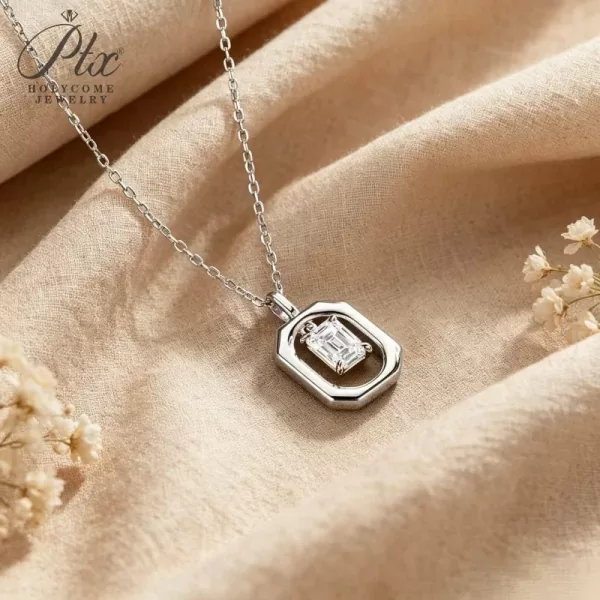
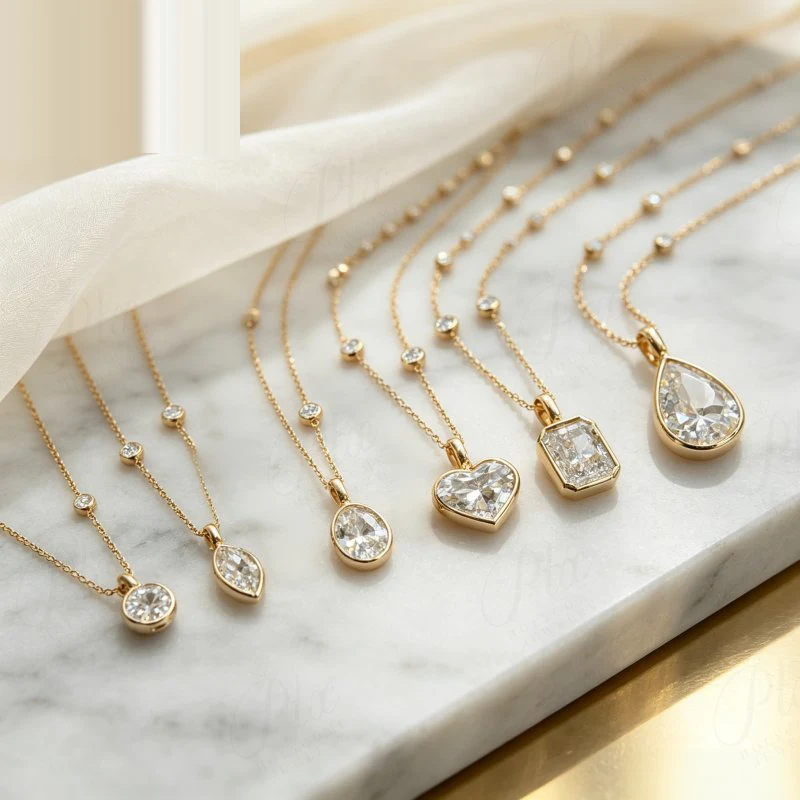
- Teardrop or elongated stones, which echo the vertical line.
- Sliding charm pendants built to move along the chain.
Heavy round pendants tend to flip or pull the lariat off balance. If your pendant is weighty, a fixed chain is the better home for it.
Neckline pairings
The lariat is made for open necklines. A V-neck sweater, a wrap dress, a collared shirt worn open, a strapless top. The V of the necklace mirrors the V of the clothing. Under a crewneck or a turtleneck, the lariat has nowhere to go and disappears.
For a deeper plunge, let the pendant sit lower, around the sternum. For a modest V, keep the drop shorter so the pendant rests just below the collarbone. The adjustable length means you are not stuck with one proportion.
Tying and finishing details
A lariat only looks polished if the knot or slide is neat. If your lariat ties, practice the knot once or twice before wearing it out. A loose, floppy knot reads casual; a clean sliding knot reads deliberate. Keep the loose ends trimmed or hidden, not dangling past the pendant.
Sterling silver lariats often come with a small finishing bead or a second pendant on the short end. Use that detail intentionally. It should read as part of the design, not as an afterthought.
Layering with a lariat
A lariat already draws a vertical line. Layering a second fixed chain on top can work if the second piece is short and simple, like a 16 inch choker. Avoid adding another long pendant; two vertical drops on the same neckline tangle visually and physically.
Silver pairs with silver. If you want to mix metals, keep the lariat in sterling and let the shorter layer be gold, or vice versa. One vertical line, one short accent, clean proportions.
Explore our silver pendants to find slim bars and small discs that translate well to a lariat chain, and pair the look with a smaller initial pendant if you want the short layered accent.
The adjustable advantage
The reason to reach for a lariat is flexibility. One pendant, many necklines, many moods. It is the kind of piece a stylist reaches for when an outfit needs a vertical line but the length is hard to pin down. With a small sterling silver pendant anchoring the drop, it reads as deliberate, elegant, and quietly personal.
Care of an adjustable chain
Lariats take slightly more care than fixed chains because the moving parts are where they wear. The sliding knot or loop loosens over time, especially if the chain is pulled frequently. A quick check every few weeks, tightening the knot a little, keeps the drop from drifting. If the lariat ties, re-tying it cleanly now and then keeps the look deliberate.
Sterling silver lariats can kink near the knot where the chain bends repeatedly. Store it hanging, not folded in a drawer, to preserve the curve. A soft pouch on a hook works well.
When to skip the lariat
A lariat is not the right choice for every pendant. Heavy stones, very wide plates, or pieces built with a fixed bail that cannot slide will not adapt to an open chain. If your pendant only sits on a closed loop, it belongs on a traditional cable or rolo chain. Treat the lariat as a styling option for the pendants designed to move, not as a retrofit for everything in your box. When it does fit, though, the same pendant suddenly feels like a new piece.
Authoritative References
For buyers who need to verify the technical and regulatory basis of this guide, the following independent institutions publish authoritative reference data:
- Wikipedia: Sterling Silver - the 92.5% silver alloy standard and hallmarking conventions.
- ISO 9001 Quality Management - the international standard for consistent production quality.
Frequently Asked Questions
Which chain lengths should I stock first?
16 to 18 inch covers most necklines and gift purchases. Add 20 inch for layering sets and 24 inch for pendant lines.
Are your chains nickel-free and hypoallergenic?
Yes. Sterling silver is 92.5% silver; stainless lines use 316L. Both are nickel-safe for reactive customers when plated correctly.
Can necklaces be personalized?
Laser engraving on pendants and clasps is available from 50 pieces, with 3–5 day turnaround on the engraving step.
What is the bulk lead time?
15–20 days under 500 pieces; 25–30 days for custom pendants or new molds.
Every figure here is quoted from our own bench in Wuzhou.
Send a spec sheet