Silver Necklace Layering: Clasps That Keep Layers From Tangling

Styling & Trends — the notes below follow the order we actually quote, sample and ship these pieces.
Two silver necklaces at different lengths should look like a deliberate layered look. Instead, you pull them over your head and spend ten minutes untangling knots that formed at the back of the neck. Most layering problems are not the chains themselves; they are the clasps. The wrong clasp catches, slides, and pulls chains together.
The four clasp types, ranked for layering
Lobster clasp is the workhorse. It is spring-loaded, secure, and easy to operate one-handed, which matters when you are clipping a second layer in place. It is the best default for everyday layering because it stays put once closed. Spring ring clasp is smaller and lighter but less secure; it can open accidentally if the ring is thin, and it is harder to see and operate behind your neck.
Toggle clasp (a bar through a ring) looks beautiful and is easy to fasten, but it can twist and slip under movement. It suits a single statement layer more than a stack. Magnetic clasp is the easiest to use but the weakest security option; it can pop open if caught on clothing, so reserve it for a light, top layer you rarely remove in a hurry. Sterling silver chains typically use the same 92.5% silver alloy discussed in this sterling silver reference, and the clasp metal should match to avoid uneven wear.
Why clasp placement causes tangling
Tangling happens because chains slide around the neck and the heavier clasp ends up traveling to the front or side, crossing the other chain. Shortening one layer by an inch, or using a layer with a fixed pendant, keeps that chain from rotating freely. Extender chains are a cheap fix: they let you set each layer at a precise length so the pendants land at different heights instead of colliding.
If you are building a two- or three-layer stack, choose a chain length chart first (16 inch, 18 inch, 20 inch) and then match the clasp to the weight. Heavy pendants belong on strong lobster clasps; fine chains can use smaller clasps.
One-handed fastening in practice
Most people undo a clasp in front of a mirror, around the front of the neck, then rotate it around. That works best with lobster clasps because the lever is large enough to pinch. Spring rings require two hands and good eyesight. If you dress quickly or wear layers often, pay the small price for lobster clasps on the two chains you wear most.
A small but real detail: the jump ring that connects the clasp to the chain should be soldered closed. An unsoldered jump ring opens under repeated layering and undressing, which is how necklaces end up lost. When you also wear silver hoops, keep the earring findings in the same secure style so your whole set wears consistently.
Building a tangle-free two-layer stack
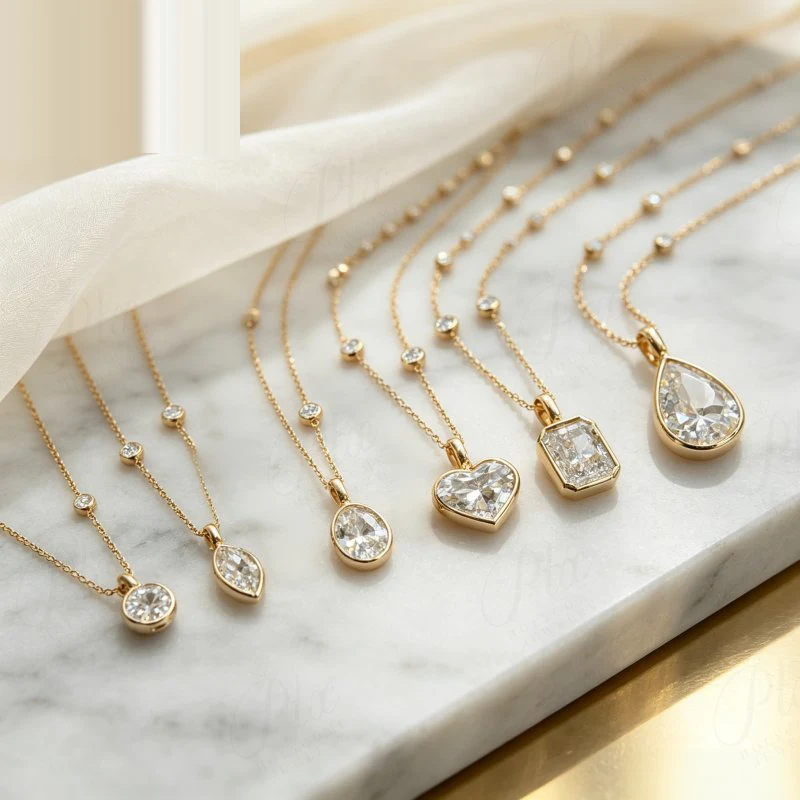
The simplest tangle-proof setup is two chains with fixed pendants at 16 and 18 inches. The pendants weight the chains so they hang vertically instead of rotating, and the two-inch gap keeps the pendants from crossing. If you prefer no pendants, use a thinner fine chain for the top layer and a slightly heavier chain for the bottom layer; the weight difference keeps them separated instead of sliding over each other.
A dedicated layering clasp or short connector that joins two chains at the back removes the tangling problem entirely, because the chains are physically held apart. These connectors clip onto your existing lobster clasps, so you do not need to buy new chains. They are especially useful when one chain is much finer than the other and keeps sliding under the thicker chain.
Heat and humidity also play a small role. Sterling silver expands very slightly against body heat, and warmed chains twist more easily through the day. A clasp with a little extra weight at the back actually helps here, because it keeps the closure resting at the nape of the neck instead of drifting forward and crossing the other chain.
Frequently asked questions
Which clasp is best for layered necklaces?
Lobster clasps. They are secure, easy to operate, and stay closed through movement, which keeps layers from sliding into each other.
Are magnetic clasps safe for daily wear?
They are convenient but can pop open. Use them only on light top layers, and never on a chain holding an expensive pendant.
How do I stop my layered necklaces from tangling?
Set each layer 2 to 4 inches apart in length, use pendants to weight the chains so they do not rotate, and choose matching secure clasps with soldered jump rings.
What clasp is easiest to fasten alone?
A lobster clasp, followed by a toggle clasp. Spring rings are the hardest to operate one-handed.
Layered necklaces are a gift she can build over the years, and starting her with one well-made chain and a reliable lobster clasp means every piece she adds later will work with it. For gifting ideas across categories, see our guide on choosing silver jewelry for her.
Every figure here is quoted from our own bench in Wuzhou.
Send a spec sheet