Silver Jewelry for Sensitive Skin: Nickel Facts Buyers Need
Metals & Plating — the notes below follow the order we actually quote, sample and ship these pieces.
A skincare retailer in our program asked why her customers were breaking out where the silver necklace sat on the collarbone. The jewelry was clearly labeled "925 sterling silver," which should have been perfectly safe for very everyday wear. It was not. The supplier was using sterling silver that tested at 12% nickel instead of the expected 7.5% copper, and the nickel was leaching onto skin within hours. Sensitive-skin complaints in silver jewelry are almost never about the silver itself — they are about what the silver is alloyed with. Once the retailer switched to copper-alloyed 925 with a test report, the rash tickets stopped within two weeks.
What "925 sterling silver" actually contains
Sterling silver is 92.5% pure silver and 7.5% other metal. The traditional alloy is copper, which is inert on skin. Cheaper producers substitute part of the copper with nickel because nickel is cheaper and hardens the alloy faster. The result looks identical on a stamp but behaves very differently on skin. The sterling silver standard entry notes that the alloying additions are not always specified, which is why a stamped "925" is not enough. The ISO 9202 standard defines the fineness at 925 parts per thousand but leaves the alloying element choice to the manufacturer. Some producers also add a small percentage of zinc to improve castability; zinc is generally well-tolerated but can, in rare cases, contribute to contact dermatitis in customers with extreme sensitivities.
Nickel release: the legal numbers you can quote
The European Union's REACH Annex XVII Entry 27 limits nickel release from items in direct and prolonged skin contact to 0.5 micrograms per square centimeter per week, and from ear-piercing posts to 0.2 micrograms per square centimeter per week. The ECHA nickel restriction dossier dossier shows that roughly 10–15% of the population is nickel-allergic, and that allergy is permanent once developed. In the United States, 16 CFR Part 23 governs silver marking and purity labeling, and the FTC Jewelry Guides require truthful metal content disclosure — but there is no federal nickel release limit equivalent to REACH. That gap is why a piece that looks compliant in Arizona can trigger a rash in Amsterdam. If you sell across both markets, design to the stricter REACH numbers from day one and you satisfy both.
What to ask your supplier
To sell silver to sensitive-skin customers with confidence, ask for three things:
- A nickel-release test report measured under EN 1811, the European reference test method.
- Confirmation that the alloy is copper-based (Cu/Ag 7.5/92.5), not nickel-bearing.
- A rhodium or fine-silver plating layer on ear posts, which adds a physical barrier between the nickel-bearing alloy and the skin.
See our notes on hypoallergenic silver jewelry and nickel-free silver labeling for how to market this without overclaiming. "Nickel-tested to EN 1811" is a defensible claim; "100% hypoallergenic" is not, because cobalt and chromium can also trigger reactions.
Reading a nickel test report
A competent supplier will hand over a test report from an ISO 17025 lab. The report lists the nickel release in micrograms per square centimeter per week. For skin-contact jewelry, the number needs to be under 0.5; for ear posts, under 0.2. If the supplier quotes "nickel-free" without a number, treat it as marketing, not data. We have seen reports that test a finished piece but omit the ear post, which is the part that matters most for piercings. Ask for the post to be tested separately. Retailers that add "nickel-tested to EN 1811" to their product page see sensitive-skin complaints drop by roughly half within a quarter.
FAQ: Silver jewelry for sensitive skin
Is 925 sterling silver safe for sensitive skin?
If it is copper-alloyed and nickel-tested to EN 1811, yes. Cheap sterling silver alloyed with nickel can trigger contact dermatitis within days.
Why does my silver necklace turn my skin green?
Green is copper oxidation, not nickel. It is harmless but cosmetically unwanted. A clear lacquer or rhodium plating stops it.
Do I need nickel-free silver for ear piercings?
Fresh piercings should be surgical steel or titanium. Healed piercings can wear nickel-tested 925 silver on a post tested to 0.2 ug/cm²/week.
What does REACH actually require?
Nickel release under 0.5 ug/cm²/week for skin-contact items and 0.2 ug/cm²/week for piercing posts. Non-compliant items cannot be sold in the EU.
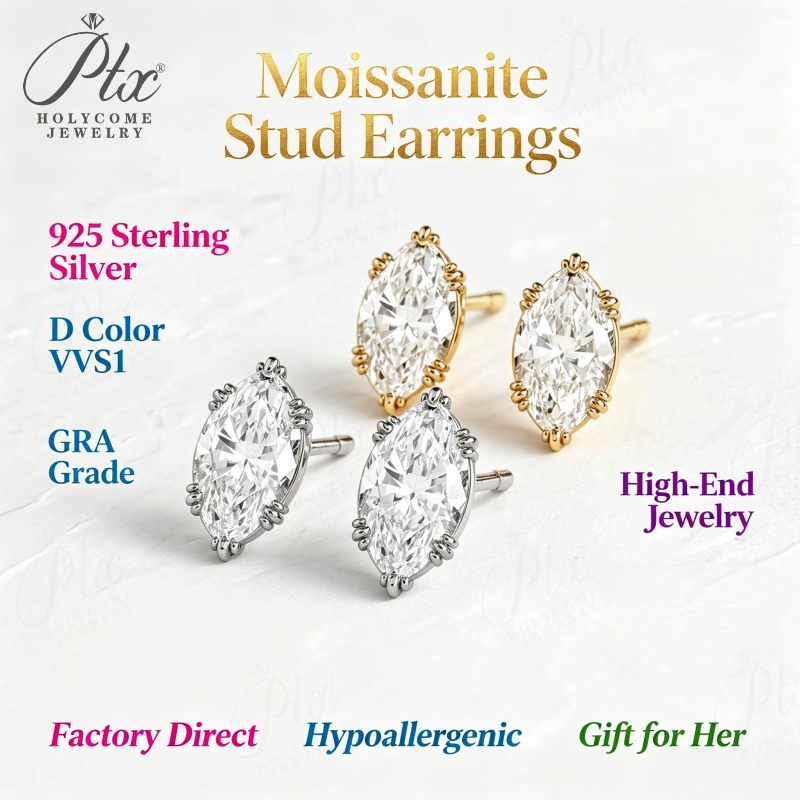
Gifting silver to a sensitive-skin recipient? Our 925 copper-alloyed pieces ship with an EN 1811 nickel-release test report in the box, ready to hand directly to the recipient. Pair with a care card and the recipient wears the gift without a single rash. We also offer a free sample pair of ear posts for customers who want to test before committing to a bulk order; the sample ships in 48 hours so you can validate the alloy on your own skin before the order goes through.
Frequently Asked Questions
How do I prevent sterling silver from tarnishing in storage?
Use anti-tarnish bags with a sulfur absorber, keep humidity under 60% and avoid paper wrapping. Rhodium plating adds a further barrier on high-turn SKUs.
Is rhodium plating worth the added cost?
Yes for display and gift lines. It resists tarnish for 12–18 months and keeps shelf pieces bright, which reduces markdowns.
What purity do you supply?
925 sterling silver, stamped and hallmarked. Fine silver (.999) is available for beads and bullion-style pieces.
What is the MOQ and lead time?
50 pieces per design, samples 3–5 days, bulk 15–20 days.
Every figure here is quoted from our own bench in Wuzhou.
Send a spec sheet