The New Baby Keepsake Pendant: Choosing Stone, Chain Length and Engraving for Mom

Engraving & Personalisation — the notes below follow the order we actually quote, sample and ship these pieces.
A new baby produces a flood of practical gifts—diapers, blankets, bottles—and almost nothing for the parent. A small birthstone pendant on a silver chain is the rare present that lands in mom's jewelry box and stays there. It is sized to a real wrist of experiences rather than a registry, and it photographs beside the baby's hand at every milestone.
When to give it
The baby shower is too early—the birth month is known but the date, weight and name are not. The hospital visit works if you already know the baby's full name and birth time. The cleanest timing is the one-month visit or the 100-day celebration, when the parents have slept enough to actually appreciate jewelry. If you are close enough to know the birth month before delivery, pre-order the pendant blank and leave the engraving line for the birth details.
Pick the stone by birth month
Use the modern birthstone list. January is garnet, February amethyst, March aquamarine, April a clear quartz or white topaz stand-in for diamond, May emerald, June pearl or alexandrite, July ruby, August peridot or spinel, September sapphire, October opal or pink tourmaline, November citrine, December blue topaz or turquoise.
Two caveats. Soft stones—pearl, opal, turquoise, lapis—do not belong on a pendant that a baby will grab and gum. For June, October and December babies, choose the harder option (alexandrite, tourmaline, blue topaz) on a daily-wear piece. For April, a 5 mm clear CZ is the honest, affordable stand-in for diamond; label it as such.
Bezel-set, never prong-set
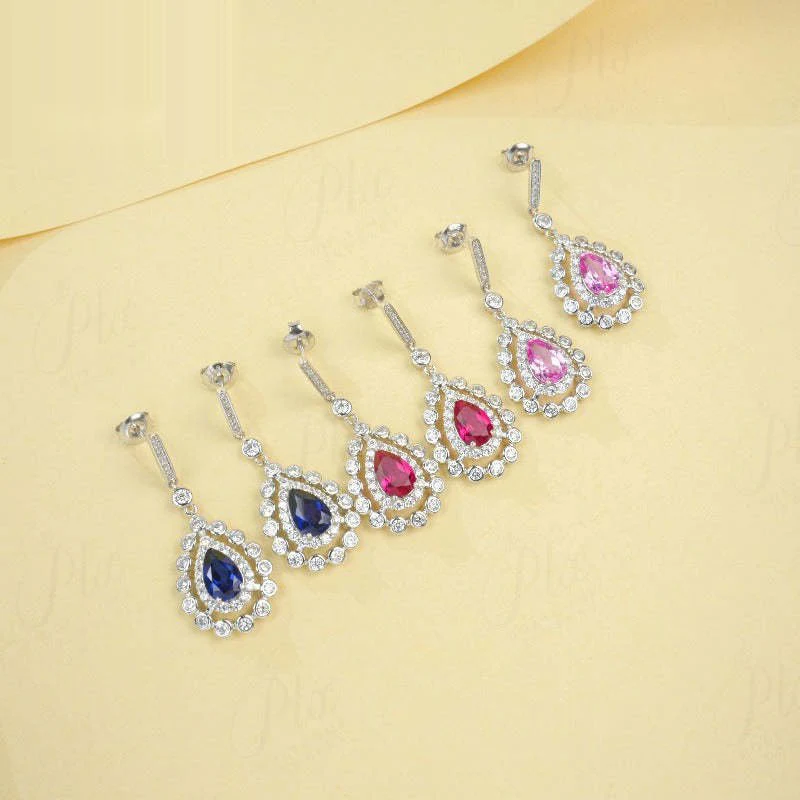
A baby's fingers find prongs. A bezel setting wraps the stone in a smooth silver rim with no edges to catch, and it is the only choice for a pendant that lives at breast level. Keep the stone between 3 and 5 mm—large enough to read, small enough that it does not jab the baby's cheek during feeding.
Chain length for new parents
New moms live in crewnecks, button-downs and nursing tops. A 14 inch choker sits under the collar and is invisible. An 18 to 20 inch chain drops the pendant just below the neckline, where it shows over a knit top and does not hang in the baby's face during feeding. Skip chains longer than 22 inches—babies grab, pull and chew. A 1 mm cable chain is light enough that she forgets she is wearing it; a 2 mm chain feels like a burden when she is already carrying car seats.
What to engrave
The pendant front carries the stone. The small disc or bar beside it can carry:
- Baby's first name, in lowercase script for softness.
- Birth date in numeric form—03.17.2026—shorter than words.
- Birth time in 24-hour format (14:22), which is a detail only the parents care about and therefore the most personal.
- Birth weight in pounds and ounces, under 15 characters.
A tiny footprint outline engraved on the back is a classic, but ask for it shallow—deep engraving on a thin pendant wall weakens the metal.
For moms of more than one child
A cluster pendant with one stone per child, arranged by age, is the standard second-child upgrade. Order the first pendant as a single stone and leave room on the chain—a 20 inch chain carries two or three small pendants without crowding. When the second baby arrives, the new stone clips on, and the original piece becomes a set rather than a replacement.
Adoption and rainbow babies
Adopted babies do not come with a birth month the way biological babies do, but the family still deserves the keepsake. Use the adoption date as the anniversary and pick a stone that matches the child's personality or the parents' birth month rather than a biological date. Rainbow babies—a child born after a loss—warrant a softer palette: a moonstone for June, a rose quartz for any month, or an opal for October. The engraving on these pieces should stay hopeful and specific, not abstract.
Hospital timing and the first wear
If the gift is arriving at the hospital, ship it to the parents' home rather than the hospital room—new parents are flooded with visitors and the piece gets lost on a crowded side table. Wait until they are home and settled. The first time she puts the pendant on is usually the first morning she manages a shower alone, and that is the moment the gift is actually received.
What to ask the supplier
- Is the setting a closed bezel with no exposed prongs?
- Is every edge polished smooth, including the back of the pendant?
- Can you leave the engraving line blank and ship the pendant quickly once the birth details arrive?
- Is the chain 925 silver and nickel-free for skin-to-skin wear?
A baby pendant works because it is small, smooth and tied to a date the parents will never forget. Choose the hard-stone option, keep the chain at 18 to 20 inches, and engrave the detail only they care about. See the range in our birthstone pendants for bezel sizes and chain options.
Authoritative References
For buyers who need to verify the technical and regulatory basis of this guide, the following independent institutions publish authoritative reference data:
- GIA Gem Encyclopedia - independent grading and identification reference for natural and lab-grown gems.
- Wikipedia: Moissanite - peer-reviewed background on moissanite chemistry, optics and history.
Frequently Asked Questions
Which chain lengths should I stock first?
16 to 18 inch covers most necklines and gift purchases. Add 20 inch for layering sets and 24 inch for pendant lines.
Are your chains nickel-free and hypoallergenic?
Yes. Sterling silver is 92.5% silver; stainless lines use 316L. Both are nickel-safe for reactive customers when plated correctly.
Can necklaces be personalized?
Laser engraving on pendants and clasps is available from 50 pieces, with 3–5 day turnaround on the engraving step.
What is the bulk lead time?
15–20 days under 500 pieces; 25–30 days for custom pendants or new molds.
Every figure here is quoted from our own bench in Wuzhou.
Send a spec sheet