March and September Birthstone Pendants: Aquamarine, Bloodstone and Sapphire for Daily Wear
Stones & Gemstones — the notes below follow the order we actually quote, sample and ship these pieces.
March and September sit at opposite ends of the year and at opposite ends of the birthstone hardness scale. A March pendant chosen without that difference in mind will scratch and fade. A September pendant chosen without the color conversation will disappoint. Here is how to pick both correctly.
March: aquamarine or bloodstone
Modern March is aquamarine, a beryl that ranks 7.5 to 8 on the Mohs scale—hard enough for daily wear, soft enough to care for. Traditional March is bloodstone, a dark green chalcedony dotted with red jasper, ranking 6.5 to 7. The two stones read nothing alike.
Aquamarine's pale blue is the color of shallow seawater. The most valuable material leans slightly green—the Santa Maria tone—but the everyday commercial stone is a clear, light blue. Bezel-set a 5 to 7 mm round or cushion in a 12 to 15 mm silver frame; prongs catch on clothing. Aquamarine can fade with prolonged direct sun, so it is not the stone for a pendant that lives outside on a gardener or a runner. Avoid ultrasonic cleaning on aquamarine—heat and vibration can split internal inclusions.
Bloodstone is the alternative, and it is underrated. The dark green field with rust-red specks reads masculine and grounded. It pairs naturally with a men's dog tag or a unisex coin pendant. Bloodstone does not fade, and it tolerates ultrasonic cleaning. For a March birthday recipient who does not wear blue, bloodstone is the correct call.
September: sapphire
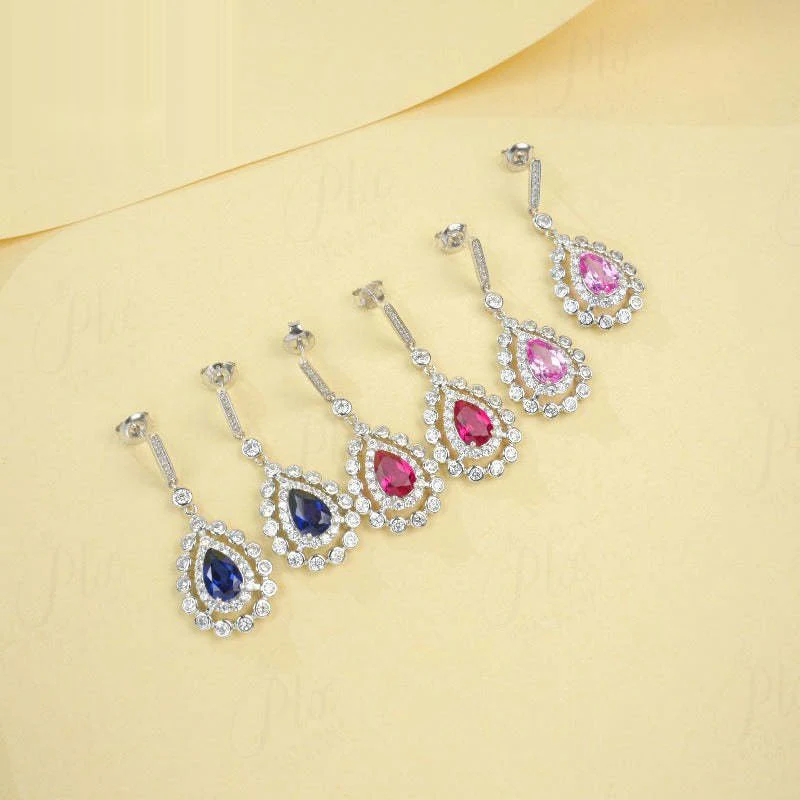
Sapphire is corundum at 9 on the Mohs scale—second only to diamond. It is the toughest daily-wear birthstone on the calendar. The default September sapphire is blue, but pink, yellow, green and parti sapphires are the same mineral in different colors. When a customer says "sapphire pendant" without a color, confirm which blue: cornflower, royal, or almost-black navy. The price gap between them is real, and the expectation gap is wider.
A 4 to 6 mm round or oval in a four-prong or bezel setting is the everyday sweet spot. Prongs work on sapphire because the stone does not chip the way aquamarine does. Sapphire tolerates ultrasonic cleaning, chlorine (within reason) and daily bumps. It is the birthstone you can put on a child or a tradesperson without hesitation.
Natural vs lab-created
Lab-created sapphire is visually identical to natural sapphire, at a fraction of the price, with the same hardness and the same optical properties. Lab-created aquamarine exists but is less common. Disclose the origin on the product page—a customer who thinks she is buying a natural cornflower sapphire and gets a lab-grown one will return it, even though the lab-grown stone is the better daily-wear choice. Label the stone honestly and price accordingly.
Styling against silver
Aquamarine's pale blue needs the cool tone of sterling silver to stay icy. In yellow gold it leans green; in rose gold it reads gray. Silver is the default and it is correct.
Sapphire, by contrast, pops against both silver and white gold. The deep blue against bright silver is the classic September look. Pink sapphire pairs warmer—if the customer picks pink, silver still works but a rose-gold vermeil setting flatters more.
Gift-angle pairings
March birthdays fall at the start of spring, which suits a "new chapter" message—a new job, a new home, a first child. September birthdays fall at the start of the school year and the run-up to autumn, which suits a "return" message. Sapphire is also the traditional 23rd-anniversary stone, so a September sapphire pendant works as a late-anniversary gift.
Anniversary gemstone pairings
Beyond birthdays, both stones carry anniversary weight. Aquamarine is the traditional 19th-anniversary stone. Sapphire is the 5th and 45th. A March-born recipient who has been married nineteen years gets a double-match gift—their birthstone and their anniversary stone in one pendant. A September recipient married five years gets the same. Ask the supplier to confirm the anniversary list against the piece so the engraving on the back can reference both.
Sizing for men versus women
Aquamarine on a man reads soft unless the stone is bumped up to 7 mm and set in a heavier 18 mm bezel on a 22 inch chain. Sapphire on a woman stays at 4 to 6 mm on an 18 inch chain. The stone size is driven by the chain and the wearer, not by the birthstone calendar. A 3 mm aquamarine on a broad man's chest disappears; a 7 mm sapphire on a delicate woman's neck looks borrowed. Size the stone to the person before you size it to the month.
What to ask the supplier
- Is the stone natural or lab-created, and is that stated on the tag?
- Has the stone been heat-treated? Heat treatment is standard and accepted; fracture-filling is not.
- Is the setting a bezel (for aquamarine) or prongs (for sapphire), and is the edge polished smooth?
- What chain length is included, and can it be upgraded to 18 inches?
March and September pendants are not interchangeable. Match aquamarine to a bezel and a cool silver chain, match sapphire to prongs and honest labeling, and the piece lasts. See the range in our birthstone pendants for stone options and setting styles.
Authoritative References
For buyers who need to verify the technical and regulatory basis of this guide, the following independent institutions publish authoritative reference data:
- GIA Gem Encyclopedia - independent grading and identification reference for natural and lab-grown gems.
- Wikipedia: Moissanite - peer-reviewed background on moissanite chemistry, optics and history.
Frequently Asked Questions
Which chain lengths should I stock first?
16 to 18 inch covers most necklines and gift purchases. Add 20 inch for layering sets and 24 inch for pendant lines.
Are your chains nickel-free and hypoallergenic?
Yes. Sterling silver is 92.5% silver; stainless lines use 316L. Both are nickel-safe for reactive customers when plated correctly.
Can necklaces be personalized?
Laser engraving on pendants and clasps is available from 50 pieces, with 3–5 day turnaround on the engraving step.
What is the bulk lead time?
15–20 days under 500 pieces; 25–30 days for custom pendants or new molds.
Every figure here is quoted from our own bench in Wuzhou.
Send a spec sheet

