What Makes a Sterling Silver Necklace Actually Work for Everyday Wear
Metals & Plating — the notes below follow the order we actually quote, sample and ship these pieces.
There are two kinds of silver necklace in any boutique. The first comes out for dinners and dates, lives on a velvet bust, and is removed before sleep. The second is the one a customer forgets she is wearing. That second category is where repeat purchases happen, and it has a very specific spec sheet. Stock the wrong spec and you get returns from people who say the necklace tarnished in a month or caught on everything.
The weight floor
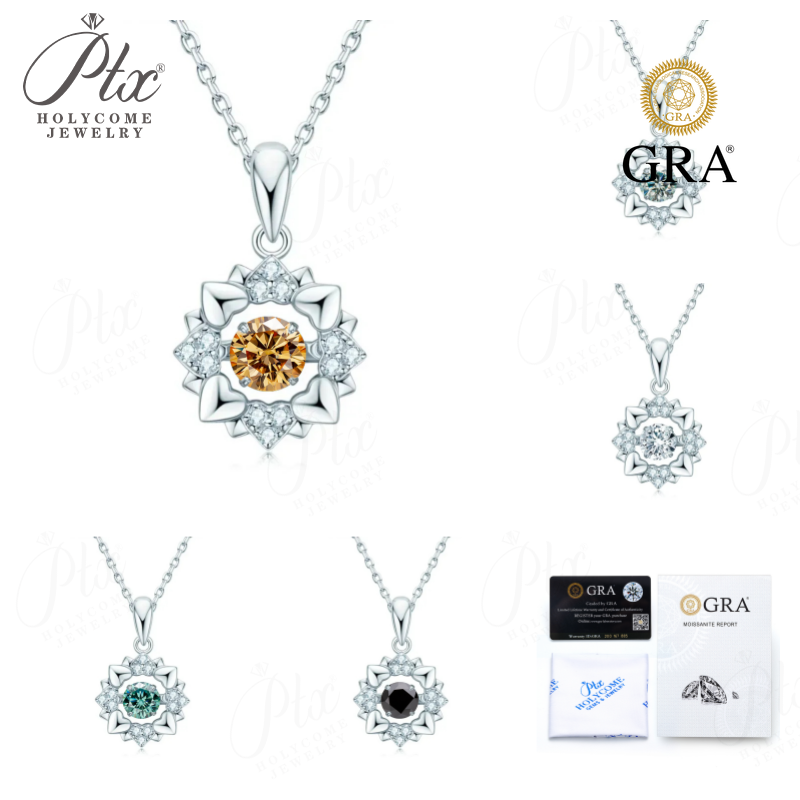
An everyday pendant should sit between 2.2 and 4 grams. Below 2 grams the pendant flips around on the chain, lands upside down, and reads as fragile. Above 4 grams it pulls the chain down, stretches the links over time, and leaves a permanent indent on the collarbone. A 2.5 to 3.5 gram disc on a 1.2mm chain is the sweet spot. Ask the supplier for gram weight on the spec sheet, not just millimeter diameter. Diameter tells you how big it looks; gram weight tells you how it behaves.
Chain gauge matters more than the pendant
Most everyday-necklace complaints are about the chain, not the pendant. A 0.8mm cable chain is too fine for daily wear. It kinks, tangles in hair, and breaks if it catches on a door handle. Spec a 1.0 to 1.3mm cable chain, or a 1.5mm box chain for customers who want something stiffer and less prone to tangling. Rope chains look luxe but trap lint and hair; skip them for the everyday SKU. The clasp should be a lobster claw, not a spring ring. Spring rings fail under repeated daily handling and are the single most common repair ticket in silver jewelry.
What happens at the skin
Sterling silver (ISO 925 sterling silver standard) is 92.5 percent silver and 7.5 percent copper. The copper is what reacts with sweat, lotion, and perfume and produces the greenish film some customers notice on their neck. This is not a defect, but it is a support ticket. Two design choices reduce it. First, a high-polish finish on the back of the pendant rather than a brushed or matte back; polished surfaces are easier to wipe. Second, a rhodium flash plating on the chain for customers with sensitive skin, at a small upcharge. Make that upcharge visible on the retail tag so the buyer understands what they are paying for.
The clasp extender and length question
Every everyday necklace should ship with a two-inch extender. One size cannot fit every neck, and the difference between a 16-inch choker and an 18-inch pendant drop changes how the piece looks on a customer who is testing it in a mirror. The extender adds a few cents in cost and removes a large fraction of return reasons. Stock the 18-inch as the default chain length, because it works over a turtleneck and under an open collar; the 16-inch reads more deliberate and is better held as a separate SKU for layered looks.
Common stock mistakes to avoid
- Pendants over 5 grams marketed as everyday wear; these belong in the occasion display.
- Spring-ring clasps on anything priced above $35; the warranty cost outweighs the saving.
- Fine chains under 1mm paired with name pendants, where the pendant's own weight stretches the links.
- Matte finishes on the back of the pendant, which show tarnish faster and are harder to clean.
- No extender on the default SKU, which forces the customer to guess at her length.
How to merchandise the tier
Group the everyday pieces on a single bust at eye level, not scattered through the case. The customer who is buying a daily necklace wants to compare three or four options at once: a plain disc, a small initial, a thin bar, and a birthstone. The supplier should be able to supply all four on the same chain spec so the display is coherent. Price them in a tight band, $42 to $68 retail, so the customer chooses on style rather than sticker shock.
What to tell the customer at the counter
A customer buying an everyday necklace is not just buying the piece; she is buying a promise that it will still look right next Tuesday, without any extra care ritual. The boutique should hand her three instructions. Leave it on while showering only if the chain is rhodium-flashed; otherwise it comes off. Skip applying perfume over the pendant. Store it flat in a drawer rather than balled in a jewelry dish. These three lines prevent the most common support tickets and take ten seconds to say. Customers who are told them at purchase treat the piece as an everyday item; customers who are not told them return it within a month saying it tarnished.
For a deeper look at the pendant shapes in this tier
Browse our silver pendants and compare gram weights side by side before placing a wholesale order.
Frequently Asked Questions
Which chain lengths should I stock first?
16 to 18 inch covers most necklines and gift purchases. Add 20 inch for layering sets and 24 inch for pendant lines.
Are your chains nickel-free and hypoallergenic?
Yes. Sterling silver is 92.5% silver; stainless lines use 316L. Both are nickel-safe for reactive customers when plated correctly.
Can necklaces be personalized?
Laser engraving on pendants and clasps is available from 50 pieces, with 3–5 day turnaround on the engraving step.
What is the bulk lead time?
15–20 days under 500 pieces; 25–30 days for custom pendants or new molds.
Every figure here is quoted from our own bench in Wuzhou.
Send a spec sheet