Birthstone Ring vs Pendant: Which One Belongs in Your Case
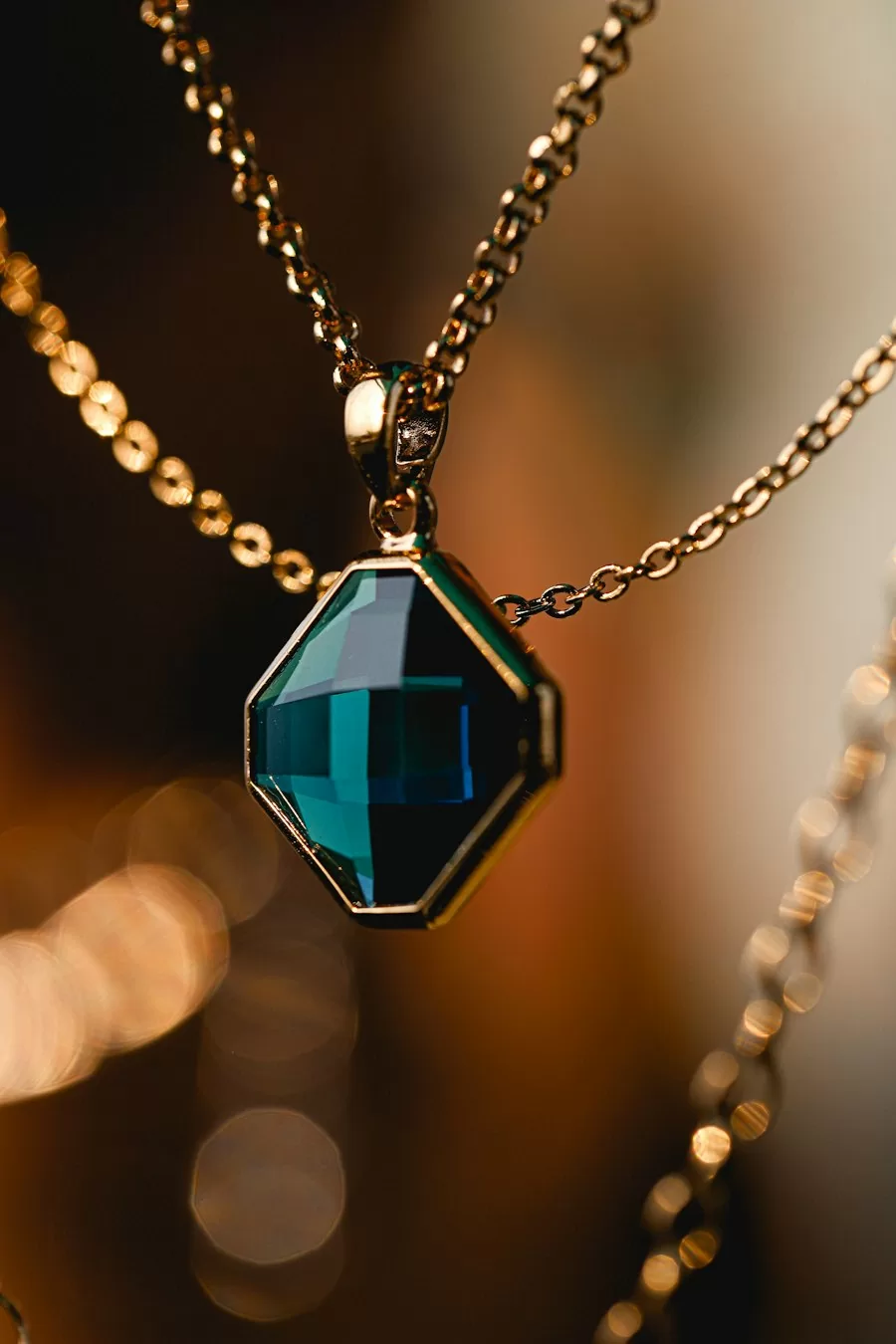
Stones & Gemstones — the notes below follow the order we actually quote, sample and ship these pieces.
A birthstone is a birthstone, whether it sits on a finger or a chain. But as inventory, the two formats are not interchangeable. A ring carries a sizing risk that a pendant does not. A pendant carries a styling risk that a ring does not. The question for a buyer is not which is prettier but which one fits the customer base already walking through the door.
The sizing problem on rings
Rings need a size. Most gift buyers do not know the recipient's ring size. They guess, they ask a friend, or they buy a size 7 because it is the default. Roughly one in four birthstone rings sold as a gift comes back for a resize, and resizing sterling silver is not free. The jeweler has to cut the shank, add stock, re-solder, and refinish. That labor eats the margin on a $60 retail piece. Pendants have no equivalent. A pendant fits every neck, every age, and every body type on the first try. If a boutique sells mostly gifts, pendants are the lower-risk SKU.
Margin comparison
A sterling silver birthstone pendant with a 5mm round stone in a bezel setting lands at roughly $14 to $19 wholesale and retails at $38 to $55. A comparable ring with the same stone in a four-prong setting lands at $18 to $26 wholesale and retails at $55 to $85. The ring has a higher absolute ticket, but once you subtract resize labor, ring sizing tool cost, and the occasional re-stone after a prong bends, the net margin is closer than the sticker suggests. Pendants win on velocity: a pendant sells three times a month in a boutique where a ring sells once. Turnover matters more than ticket size for a small shop.
Who buys which
The ring buyer usually knows the recipient well. She is shopping for herself, for a spouse with a known ring size, or for a milestone birthday where the size has already been discussed. The pendant buyer is wider: mothers buying for daughters, friends buying for bridesmaids, coworkers buying for a retirement. If the boutique's customer list skews gifting, pendants cover a larger share of demand. If it skews self-purchase, rings hold their own, because a woman buying for herself will know her size and will want the ring format.
Stone quality differences
The same birthstone behaves differently in the two settings. On a ring, the stone takes impact against desks, doors, and sinks. Soft stones like turquoise (December), opal (October), and pearl need protective bezels on a ring; prongs will chip them within a year. On a pendant, the stone hangs against the chest and takes far less impact, so the same stones can live in prongs. Buyers who want to stock soft birthstones should default to pendants and avoid the ring version entirely unless the vendor offers a full bezel.
When to carry both
A boutique that already has a working ring sizer and a bench jeweler on staff can carry both. The right ratio is roughly two pendants for every ring in the birthstone case. Stock the ring in sizes 6 through 8, the most common women's range, and special-order the rest. For pendants, stock one of each month on a short chain and let the customer order a longer chain if she wants it. The two formats cross-sell naturally: a mother who buys a birthstone pendant for her daughter will often pick up a matching ring for herself in the same visit.
What to ask the supplier
- What is the wholesale cost difference between the pendant and the ring version of the same stone?
- Does the ring ship in half sizes, and is there a price premium for half sizes?
- Are the soft stones set in bezel or prong, and can the setting be specified at order time?
- What is the vendor's policy on re-stoning if a prong bends in the first six months?
- Can pendants and rings be ordered in matched metal finishes so they sit together in a case?
Month-by-month stocking reality
The birthstone pendants that stock deepest are the spring and summer months, because mothers are shopping for the birthdays that fall in the same season. January garnet and February amethyst sit in the case longer than July ruby and August peridot. Buyers should not spread stock evenly across twelve months. Weight the pendants toward the birthday cluster the boutique's customer base actually has, and special-order the slow months. Rings follow the same pattern but with an extra lag: a ring bought for a March birthday gets ordered in February, which means the inventory decision is made in January. Plan the open-to-buy a month ahead of the pendant season.
For the month-by-month stone notes and which cuts photograph best
Start with our birthstone pendant collection and use it as the baseline before adding rings.
Authoritative References
For buyers who need to verify the technical and regulatory basis of this guide, the following independent institutions publish authoritative reference data:
- GIA Gem Encyclopedia - independent grading and identification reference for natural and lab-grown gems.
- Wikipedia: Moissanite - peer-reviewed background on moissanite chemistry, optics and history.
Frequently Asked Questions
What ring sizes can you supply in bulk?
US sizes 5–12 including half sizes. Send a size breakdown with your order and we cast to that curve; comfort-fit inner bands reduce resize requests.
Can I order a mixed size run instead of one size?
Yes. Mixed runs are standard for wholesale: specify quantity per size and we pack and label by size at no extra labor cost.
What is the MOQ for custom ring designs?
50 pieces per design for existing molds; 100–300 pieces when a new mold or CAD model is required.
How should I price rings for retail margin?
Most partners use a 3–4x markup on FOB cost for sterling and 2.5–3x for moissanite solos, which keeps landed cost under 30% of retail.
Every figure here is quoted from our own bench in Wuzhou.
Send a spec sheet
